


The Digital Society Lab's "interview" format aims to give a voice to a diverse range of experts on digital issues, who all speak on their own behalf. The analyses and opinions expressed are those of the interviewees alone and should not be interpreted as the official position of the ANCT's Digital Society Program. This interview was conducted by François Huguet, on behalf of the Digital Society Lab, a researcher in digital humanities (PhD, Institut Polytechnique de Paris) whose work consists of investigating, documenting, and promoting the digital world in the public interest.
Foreword
Clément Marquet is a researcher specializing in science and technology studies. He is currently a research fellow at the Center for the Sociology of Innovation (CSI) at Mines Paris, he conducts research on the material, social, political, and environmental dimensions of digital technology.
His research focuses particularly on the materiality of digital technical systems, i.e., the physical infrastructures that enable them to function—such as data centers and submarine cables—as well as the political, social, and ecological tensions they generate. Using theoretical and methodological frameworks from Science and Technology Studies (STS), he traces how these infrastructures are designed, evaluated, and integrated into territories, as well as how their impacts are measured and politicized.
Breaking free from the illusion of immaterial digital technology
François Huguet: Your research focuses on closely observing the physical infrastructure of digital technology—data centers, submarine cables, networks—which is often overlooked in public discourse, as well as the work of operators. Why do you think this materiality remains so largely invisible in digital policies? How does this invisibility pose a major political problem when we want to think about and build a digital system that serves the public interest?
Clément Marquet: It's true that, in a way, digital infrastructure has long been invisible. But that has changed over the past year, and I think we'll come back to that during this discussion...
I think one of the reasons for this invisibility lies in the way marketing discourse around digital technology and the internet has been structured. A few years ago, we saw the emergence of a whole discourse around an ethereal, almost immaterial yet omnipresent technology. The discourse surrounding digital technology focused solely on the principles of dematerialization, cloud-based services, etc. The vast majority of us were not concerned, for example, with where the data we exchanged was stored, the machines that ran the apps and web services we used, etc.
Looking back, we realize that the people who created the software we use and depend on today shaped the discourse so that we would ask as few questions as possible about it and, above all, so that we would adopt their tools en masse. Initially, these companies only offered services, applications, and software. They were not infrastructure operators and did not want us to be interested in anything other than the services they offered. All our attention had to be focused on their startups, their services, and their innovations. For them, the value was in the service offered, not in the infrastructure that made it possible. And these types of economic players—startups and software service companies—were heavily promoted by the political and economic worlds, among others. They occupied almost all of the media space.
In France, if we look at the history of the country's industrial sector, we also see that the public authorities have invested little in digital infrastructure issues [Editor's note: see box below on the France Très Haut Débit plan]. In recent history, however, they have invested heavily in major projects in the areas of electricity, roads, railways, water, and even telephony. When it came to digital infrastructure, the decision was quickly made to entrust these issues to the private sector and competition. The "infrastructure" side of digital technology has therefore developed significantly in the private sector, but little in the public sector. We could take the recent example of public service delegations to bring fiber optics to our territory. These were very important, and it was not public operators who led these projects. And even when the public authorities began to reflect on the challenges of digital sovereignty, they decoupled infrastructure and service, focusing more on the type of tools than on the infrastructure that made it possible for these tools to function. In other words, there was a need for sovereign public software that worked well, but no one asked questions about public data centers or where they were located.
The shift began in the second half of the 2010s. Perhaps because it was then that we realized that digital technology has a counterpart: electrical infrastructure. The latter has a very significant, well-known, and highly visible "material thickness": power plants, power lines, etc. And the two are closely linked, as Fanny Lopez shows in her book À bout de flux (éditions divergences, 2022): while digital technology is driving massive electrification of uses, the electrical system itself is increasingly dependent on digital technology to function... I believe it is this issue of interdependence that has started to change things. Since 2015, economic competition to host data centers in Europe has become very intense. In 2019, France entered the fray by offering private operators of these infrastructures competitive electricity rates that would enable them to set up in France. But we can see today that, at that time, we were not yet able to envisage the social, political, economic, and environmental impacts that these technologies would have. The focus was on economic competition and much less on the effects that this type of equipment would have, particularly at the local level. Admittedly, there were initial tensions and protests in some areas over the installation of this equipment, but discussions remained very limited at that level. Local authorities and electricity managers had to figure out how and where to install this private equipment, how to transport the enormous amounts of electricity it consumes, and how to balance this electricity consumption with the rest of the electricity consumption in their regions. These were difficult questions that arose very quickly, and for which the regions received very little guidance from the government.
In 2025, everything changed at the summit on artificial intelligence. For nearly a week, the talk was of LLM, unicorns, and software, but above all, it was about infrastructure, concrete, electricity consumption, jobs, and more. Since AI requires enormous amounts of electricity to function, it was understood and agreed that massive investments were necessary, in the name of technological sovereignty, for data centers located in France capable of supporting this technology. It was also realized that these investments must also be considered from the perspective of land use, regional planning, major geopolitical risks, international economic competition, etc. The question of the acceptability of this type of equipment was raised, as was the more geographical question of where to locate it. This is because the State has still not reinforced the prerogatives of local authorities on these issues. An example of this: if the very recent bill on simplifying economic life is adopted, local authorities will not be able to modify their Local Urban Development Plans (PLU) in the face of data center projects classified as being of "major interest"...
Editor's note: Launched by the French government in 2013, the France Très Haut Débit (PFTHD) plan aimed to provide all French citizens, including those in rural and mountainous areas, with very high-speed connectivity, i.e., above 30 Mbit/s in 2022, using a mix of technologies ranging from fiber optics to satellite. This plan mobilized $13.3 billion in public investment, including $3.5 billion from the government, directed in particular at rural areas (known as public initiative networks). According to the evaluation report by the High Commission for Strategy and Planning, published on January 11, 2023, "the PFTHD has achieved its objectives by providing very high-speed coverage to 99% of premises in the territory." However, the evaluation report also mentions "operational difficulties and inequalities in deployment [...] depending on the areas of intervention."
Digital infrastructure and socio-environmental conflicts
François Huguet : The rollout of digital infrastructure is generating significant local tensions: conflicts over water and energy use, land development, etc. In your opinion, what do these conflicts reveal about how digital technology is currently governed?
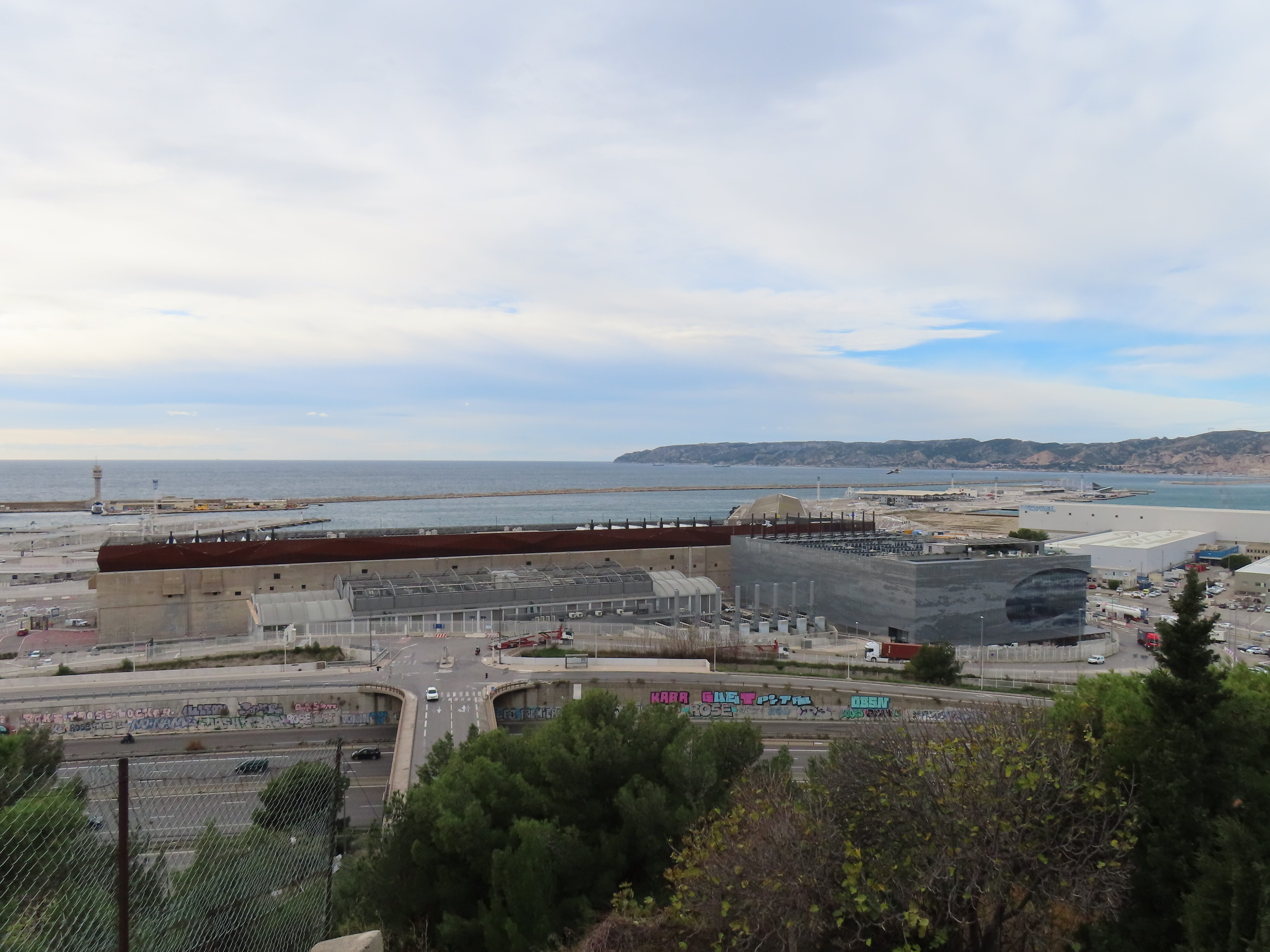
Clément Marquet: These tensions are all different because the issues at stake are unique in each case. For example, the ultra-high-speed fiber optic network in mainland France that we were just talking about raises quite different issues from those involved in setting up data centers in the same areas. The socio-political, economic, and environmental issues are very different. The geography of data centers raises issues of regional imbalance in that these facilities cannot be spread across the entire country in a decentralized manner. They are mainly developed in metropolitan areas, primarily in the Île-de-France and Marseille regions, because they need to be close to the major Internet "backbones," the long-distance high-speed Internet networks that in Europe are located between London, Paris, Frankfurt, and Amsterdam. Marseille is also attractive because the region is located at the landing point of major submarine cables connecting Europe to Africa. Of course, there are data centers that do not necessarily need to be located near these backbones and can be located elsewhere, such as cloud services and AI learning, which require less speed, for example, but these are not in the majority.
Returning to the issue of conflicts, when we look back at the history of these infrastructures, we see that their deployment has indeed been surrounded by tensions. One example is the installation of the first data centers in Plaine Commune in northern Paris (between 2000 and 2015), which sparked the first protests in the area (between 2011 and 2015). I believe that ADEME understood the issues raised by this equipment at that time. Today, it is in Marseille that we can analyze the conflicts playing out between companies, public authorities, and citizen groups. Since late 2023, the Marseille-based collective Le Nuage était sous nos pieds (The Cloud Was Under Our Feet) has been analyzing the socio-ecological impacts of local digital infrastructure, and what they are investigating is revealing from a political standpoint. The question is quite simple: faced with the electricity demand of the region's data centers, industrial choices must be made. Do we continue to develop shipyards, or do we focus solely on hosting data centers? These infrastructures are disrupting the mechanisms for allocating electrical resources and pushing our politicians to make choices that are often constrained. RTE, Réseau de Transport d'Électricité, a subsidiary of EDF, now has to operate in a completely different way due to the extremely high demands of data centers, which reserve large amounts of electricity to secure their future without actually consuming it, thereby potentially preventing other projects from going ahead. The network operator has therefore been forced to develop plans to pool the network, without always consulting local authorities, to guide the installation of large data centers, and to review electricity allocation mechanisms by providing for procedures to recover capacity if it is not used quickly enough by operators. In the United States, numerous local conflicts over the establishment of data centers are generating public concern about the ecological challenges they pose to our society and the fact that at no point has there been any democratic discussion about the development of this infrastructure. This criticism has cost the tech sector $98 billion. The "techno push" has been too strong, it is akin to aggression, and it is normal for these infrastructures to be criticized. In this context, with private control over AI technology and the enormous amortization costs of these infrastructures, it seems difficult to me to put the public interest first and therefore to think about digital technology in the general interest...
Référence :
Who measures the environmental footprint of digital technology—and how?
François Huguet: You are also interested in methodologies for measuring the environmental footprint of digital technology and the political and commercial issues involved. What do these methodological controversies say about the balance of power between public actors, industry, and experts? Can we talk today about a "neutral" or "objective" measurement of the environmental impact of digital technology?
Clément Marquet: This subject is very broad and very complex.
The first thing to consider is the scope of what we are measuring. For digital technology, we need to consider the resources extracted to build the machines, the energy required to operate them, and the cost of recycling them once they are no longer in use. When thinking in terms of "carbon equivalents," it is difficult to grasp all the dimensions, particularly the extractive aspects of digital technology. We then need to determine where "digital" ends: isn't a connected refrigerator a computer? The same goes for a so-called smart car. We therefore need to establish categories to avoid double or even triple allocation of impacts (for example, avoiding allocating the impact of a car's on-board computer to both the automotive and digital sectors). Obtaining figures and a macroscopic perspective on these points is extremely complicated. Databases on these impacts are very difficult to build because data from the industrial world cannot be used. However, it is on the basis of this data that truly relevant measurement tools could be developed. But this data is protected by industrial secrecy. And there is something paradoxical about this: manufacturers say that the indicators are not good, but at the same time, they do not share their data to improve these indicators... We are therefore building indicators using fairly obsolete databases, which are very complex to update. Things are starting to change slightly with environmental reporting requirements for data centers, even though they have already been built and little assessment has been done of the environmental cost of their implementation in a given area.
For strong measures to be implemented, we need to move towards truly binding European policies that go beyond mere reporting.
Measuring is not enough to govern; thresholds and obligations must be put in place. Only then will we be able to "control" digital technology and move towards a digital world that is desired rather than endured.
Sources
1. Today, around sixteen intercontinental submarine cables arrive in Marseille, landing, transiting, and connecting Europe and the Mediterranean to Asia, the Middle East, Africa, and the United States. These intercontinental cables enable digital information to flow, particularly on the Internet, and allow digital services deployed in what is known as "the cloud" to appear on our screens: emails, social networks, videos, and streaming movies.